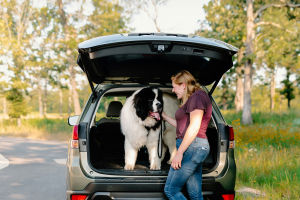
Bringing a new pet home without the right supplies ready is a bit like setting up a nursery the week after the baby arrives — technically manageable, but harder than it needs to be.
Most of the essentials are straightforward, but the details matter: wrong bowl material, ill-fitting collar, no ID tag ready, nothing safe to chew on — each one is a small problem that piles up fast in an already hectic first few days.
Getting ahead of the list isn't about spending more, it's about being prepared for a smooth landing.
The items here cover dogs and cats, which share many of the same fundamentals. Pet-specific differences are noted where they matter.
Identification and Safety
A well-fitting collar with an ID tag is the single highest-priority item, and it should be ready before the pet arrives. If a dog or cat gets loose in an unfamiliar neighborhood in the first days — which is more common than owners expect, since new pets are disoriented and bolts happen — a visible ID tag with a current phone number is the fastest way to get them back.
Tags should be engraved rather than printed, since printed information wears off quickly. For cats, a breakaway collar is important so the collar releases if it catches on something. For dogs, an adjustable collar or harness sized for the animal's current weight avoids both slipping out and being too tight.
Microchipping is the permanent backup — chips can't fall off like a tag can. Many shelters microchip before adoption, but it's worth confirming the chip is registered to your current contact information.
Food, Water, and Bowls
Stainless steel or ceramic bowls are better than plastic. Plastic scratches over time and those scratches harbor bacteria; plastic can also cause chin acne in some cats. Stainless steel is dishwasher-safe, durable, and easy to sanitize.
For food, start with whatever the pet was eating before coming home, then transition gradually over about a week by mixing increasing amounts of the new food with the old. Switching abruptly causes digestive upset in most animals. Ask the shelter, breeder, or previous owner what the animal was eating and buy at least a two-week supply of that food before pickup.
Food and water bowls should be placed away from the litter box — cats instinctively avoid eating near their toilet area.
Resting Space
A comfortable, designated resting area gives the new pet a place to decompress. For dogs, this means a bed or crate in a quiet part of the house. A crate is particularly useful for puppies and newly adopted dogs: when introduced positively — never used as punishment — it functions as a secure den and significantly helps with housetraining. Size matters: the dog should be able to stand up and turn around, but not so much larger that one corner becomes a bathroom area.
For cats, an enclosed or semi-enclosed bed in a quiet spot is ideal, especially for the first days when everything is unfamiliar. Many cats feel most secure in higher-up positions, so placing a bed on a shelf or elevated surface is often welcomed.
Containment and Transport
A secure carrier is essential from day one — for the first trip home, vet visits, and emergencies. For cats, a hard-sided carrier with a removable top makes handling easier at vet appointments. For dogs, size-appropriate carriers work for travel; leash and harness are the daily tools. Introduce the carrier to cats before it's needed by leaving it open with a soft blanket inside so it doesn't become associated only with stressful events.
Toys and Enrichment
Toys aren't optional extras — they're part of preventing destructive behavior. Pets that are bored, under-stimulated, or anxious chew furniture, scratch surfaces inappropriately, and develop behavioral problems. Chew toys for dogs, puzzle feeders, interactive wand toys for cats, and rotating the selection regularly all make a real difference. Match toys to the animal's size and energy level; a toy too small for a large dog is a choking hazard.
Grooming Tools and Cleanup Supplies
Brushes and nail trimmers should be in the kit from the start, even if serious grooming isn't needed immediately. Getting pets accustomed to having their paws handled and being brushed from a young age saves enormous hassle later. For dogs: a species-appropriate brush, nail clippers, and dog shampoo. For cats: a comb suitable for the coat length, nail clippers, and the knowledge that cat ears and teeth need periodic attention.
Enzyme-based cleaners — not regular household cleaners — are what actually break down the compounds in pet waste and eliminate the odor rather than masking it. Standard cleaners leave trace compounds that pets can still smell, which encourages repeat accidents in the same spot.
Health and Preventive Care
A first vet appointment should be scheduled before the pet arrives, not after. Bring vaccination records from the shelter or breeder, ask about flea and tick prevention appropriate for the species and local conditions, and discuss deworming if relevant.
Keep recommended preventives on hand year-round rather than reacting after a problem appears. A basic pet first aid kit — bandages, antiseptic spray, tweezers for tick removal — rounds out the health preparedness side.