Imagine carrying a small sketchbook everywhere you go, quietly recording what you see, feel, and think in real time. Sketching is not just about drawing. It is a simple daily habit that connects observation, memory, and creativity.
In a fast-moving world, it gives you a small pause to truly notice life. Every line you draw becomes a tiny mark of time, holding moments that would otherwise slip away unnoticed.
The Hidden Training Behind Quick Lines
At first glance, sketching looks fast and casual. But inside this “quickness” is a deep training process. When you draw people, you learn to capture proportions, balance, and movement in just a few seconds. When you draw objects, you start noticing how shapes overlap, how light changes surfaces, and how space is built.
Each line is like a decision. You are constantly turning what you see into what you draw. Over time, shaky lines become smoother, and unclear shapes become structured. Without even realizing it, your hands and eyes begin to work together more naturally. This quiet improvement builds a strong foundation for all visual creation later on.
Turning Everyday Life into Visual Memory
Life is full of small scenes that often go unnoticed: a cat resting on a bench, sunlight moving across the street, or people passing quietly through a station. Sketching allows you to collect these moments like a personal visual archive.
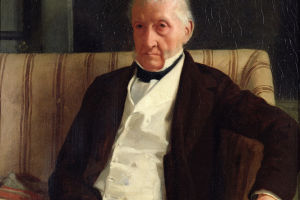
You might draw the soft lines around an elderly face and turn them into a story of time. You might exaggerate a child’s playful movement into lively shapes. You might capture falling leaves as flowing curves in the air.
These sketches do not need to be perfect. Their value lies in honesty and immediacy. Later, when you look back, these simple drawings can bring back entire memories, almost like opening a visual diary.
Where Ideas Begin: A Space for Creative Experiments
Many people feel stuck when facing a blank page. Sketching helps you break that barrier. It becomes a safe space where ideas can appear without pressure.
You can draw several rough versions of the same idea, try different layouts, or explore different visual directions. Nothing needs to be final at this stage. It is all about exploration.
Sometimes a powerful artwork begins as a very simple sketch. A rough idea can slowly grow into something complete and meaningful. What matters is not perfection at the start, but the willingness to begin.
Learning to Feel the World Through Lines
As you sketch more often, something subtle begins to change. You stop seeing the world only as objects. Instead, you start feeling it through movement, light, and rhythm.
Wind becomes the direction of bending branches. Light becomes scattered shapes across the ground. Sound and atmosphere start to transform into visual forms.
You begin to draw not only what things look like, but also how they feel. Over time, your sketches carry emotion and atmosphere naturally. Even without explanation, viewers can sense the mood behind the lines.
Building a Small Habit with Big Impact
Sketching does not require long hours or special conditions. It only requires consistency. A few minutes a day is enough to build progress over time.
You do not need perfect timing or perfect skills. What matters is showing up and drawing regularly. If you skip it, the moment is gone. But if you continue, even simple sketches will slowly become more expressive and confident.
So Lykkers, instead of waiting for the “right moment,” start with the next small moment in front of you. A notebook, a pen, and a few quiet minutes are enough.
Over time, sketching becomes more than a skill. It becomes a way of seeing life more clearly, more closely, and more honestly.