Have you ever looked at a painting and felt like you were right there in the moment?
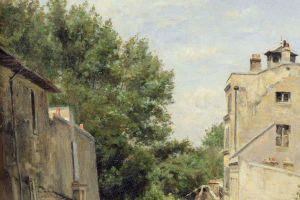
That's the magic of art—it can transport us to another time and place. Maximilien Luce's Le Quai St. Michel and Notre-Dame (1901) does exactly that. With his vibrant brushwork and lively portrayal of Paris, Luce invites us to experience the bustling energy of one of the most iconic spots in the city.
Let's explore how this masterpiece not only captures the essence of Paris but also provides a deeper understanding of Luce's unique artistic vision.
Vibrancy Through Pointillism
Luce was part of the Post-Impressionist movement, closely associated with the Pointillist technique—a method that uses small dots of color to create an image. This approach can be seen clearly in Le Quai St. Michel and Notre-Dame. While the dots might seem simple from up close, they work together from a distance to create a dynamic and lively image.
Pointillism and Color Harmony
The technique allows Luce to blend colors naturally, as the viewer's eyes mix the dots to create seamless transitions between light and shadow. In this piece, the blue of the Seine and the yellows of the buildings create a vibrant contrast that pulls your gaze across the scene, emphasizing the busy energy of the area.
Creating Movement
Pointillism is particularly effective in conveying movement. Luce's portrayal of the people on the quay, the boats on the water, and the bustling streets is alive with energy, all thanks to the delicate placement of each color dot. It feels as though the scene is in constant motion.
Actionable Tip: If you're working with color in your own art or design, consider using contrasting colors and techniques that can bring your work to life. You can experiment with pointillism or other techniques like gradients to create a sense of flow and energy.
Capturing the Spirit of Paris
The Quai St. Michel and Notre-Dame in Paris are known for their historical and cultural significance. But Luce doesn't just show a static view of these landmarks—he captures the spirit of Paris in motion, with the people, boats, and buildings all contributing to the vibrant pulse of the city.
Paris as a Living City
In Luce's painting, Paris is not just a background but a living, breathing entity. The figures in the foreground, though small, represent the ordinary people who make the city come alive. Whether it's a group walking along the quay or someone gazing at the water, the humans are integral to the scene.
The City's Iconic Landmarks
Notre-Dame stands tall in the background, a symbol of the city's rich history. Yet, Luce doesn't focus on the grandeur of the cathedral alone; it's the interaction of people with their environment that makes the painting feel real and personal.
Actionable Tip: When painting or capturing a scene of a familiar place, think about how you can show the relationship between the people and the environment. Bringing life to the setting can transform it from a mere representation into a vibrant narrative.
The Role of Light in the Composition
One of the most striking features of Luce's painting is the way he plays with light. The light in Le Quai St. Michel and Notre-Dame doesn't just illuminate the scene; it breathes life into it, enhancing the painting's mood and energy. This is typical of the Post-Impressionist approach, which prioritized the emotional effect of light over strict realism.
Natural Light as a Narrative Tool
The light in this piece is soft and inviting, reflecting the midday sun. It spills across the water, dances on the boats, and warms the faces of the people. By using natural light so effectively, Luce adds a sense of calm and serenity to the bustling streets.
Play of Light and Shadow
Luce also uses the play of light and shadow to create depth. The shadows cast by the trees and buildings give a sense of volume and structure, contrasting with the light that bounces off the river and the buildings, making them shimmer.
Actionable Tip: When working on a composition, use light as a storytelling tool. Consider how different light sources—whether natural or artificial—can affect the mood and depth of your scene.
Layering Depth with Texture
Luce's technique also shines through in his treatment of texture. The brushstrokes are layered to create a sense of depth, whether it's the texture of the buildings or the ripples on the water. Every part of the painting feels tangible, pulling the viewer into the scene.
Textural Depth in the Architecture
The stone buildings of the Quai St. Michel are detailed with layered strokes that give them a textured, almost tactile quality. The viewer can almost feel the roughness of the buildings, adding to the realism of the scene.
Fluid Texture on the Water
In contrast, the water of the Seine is fluid, its surface broken by the movement of the boats. Luce uses looser brushstrokes here, contrasting with the more rigid lines of the architecture. This change in texture helps bring both stability and fluidity into the composition.
Actionable Tip: Experiment with varying textures in your own artwork. Using different brushstrokes, materials, or techniques can help differentiate elements in your composition and add a new dimension to your work.
A Window Into Post-Impressionism
Le Quai St. Michel and Notre-Dame is not only a masterful representation of Parisian life; it also exemplifies the Post-Impressionist style that Luce helped define. His careful manipulation of light, color, and texture goes beyond mere representation, aiming to evoke emotion and movement. Through this painting, Luce transports the viewer to a time and place, making Paris not just a backdrop but a vibrant character in the story.
The Emotional Impact of Post-Impressionism
Unlike the Impressionists, who sought to capture fleeting moments of light, Post-Impressionists like Luce were more focused on conveying emotional depth. The painting is not just about what Paris looked like; it's about what it felt like to be there, in that moment.
Bridging Realism and Abstraction
The composition blends realism with abstraction, creating a balance between recognizable elements—like the buildings and people—and the abstraction of light and color. This technique allows the viewer to experience the scene in a more subjective, personal way.
Actionable Tip: When creating your own artwork, consider blending realism with abstract techniques to evoke not just the look but the feeling of a moment.
Maximilien Luce's Le Quai St. Michel and Notre-Dame captures a vibrant snapshot of Paris, alive with light, movement, and energy. Through the careful application of color, light, and texture, Luce invites us to step into a living, breathing Paris—a city that pulses with life, even as it stands still on the canvas. Whether you're drawn to the vibrant colors or the intricate details of everyday life, this painting serves as a reminder of how art can not only capture a scene but make it come alive.