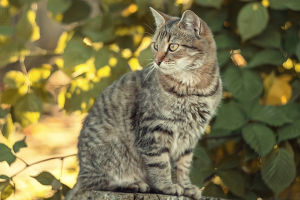
Ever noticed that soft, soothing hum when your cat is curled up on your lap? It's hard to ignore, isn't it?
That unmistakable purring sound isn't just a random noise—there's a lot going on behind the scenes when your cat purrs.
Why do cats purr in the first place? Is it always because they're content, or is there more to it? Let's explore the science behind one of cats' most intriguing behaviors.
What Is Purring?
Purring is that continuous, rhythmic sound cats produce by vibrating their vocal cords. It's a sound that's made when the cat's laryngeal (voice box) muscles constrict and relax. But what's fascinating is how it works: the sound is generated by a neural oscillator, which sends signals to the muscles of the voice box, causing them to twitch at a consistent rhythm.
This causes the vocal cords to vibrate, which then produces the characteristic purring noise. Interestingly, while many assume that purring happens only when a cat is happy, it can actually occur in a variety of situations. You'll hear it when your cat is enjoying a peaceful nap, but also when they're scared, injured, or even in labor.
Why Do Cats Purr? Theories Behind the Behavior
There are several theories on why cats purr, and while researchers are still studying this behavior, here are the most accepted reasons:
1. Comfort and Contentment: The most common reason for purring is contentment. Cats often purr when they're being petted, fed, or simply resting in a familiar environment. This calming effect is why cats will often purr while lying on your lap or sitting next to you.
2. Healing and Pain Relief: Cats also purr when they are in pain or injured. But it's not just a random reaction to stress. It turns out that the frequency of purring—between 25 and 150 Hertz—may have healing properties. Studies have shown that these vibrations can stimulate the production of growth factors that promote the healing of bones and tissues. It's a natural way for cats to help their bodies heal faster, even after a fall or injury.
3. Communication: While cats don't use purring the same way humans use speech, it may be a form of communication. Cats have been known to purr to their owners when asking for food or attention, much like a non-verbal request. Interestingly, mature cats only purr to humans or other cats when they're interacting with them in a calm, safe space, reinforcing the idea that purring is a form of mutual reassurance.
4. Stress or Anxiety Relief: Purring also serves as a self-soothing mechanism for cats. When they are anxious, stressed, or even frightened, purring can help them calm down. This is why you may hear your cat purring even in unfamiliar or stressful situations like trips to the vet or during a thunderstorm.
Can All Cats Purr?
You might be surprised to learn that not all cats purr! While domestic cats are known for their purring abilities, wild cats, like lions, tigers, and leopards, generally do not purr. However, some wild cat species, such as cheetahs and cougars, can produce a purring-like sound. The ability to purr is largely limited to the Felis genus (small cats). Big cats, whose larynxes are built differently, cannot produce the same vocalizations.
What If My Cat Doesn't Purr?
If your cat isn't purring, it's not necessarily a sign of a problem. Some cats, especially older or more reserved ones, may simply not purr as often as others. If your cat seems happy, healthy, and engages with you normally, it's likely just their unique way of expressing themselves.
However, if your cat suddenly stops purring or if they exhibit other signs of distress such as hiding, loss of appetite, or lethargy, it's important to consult a vet. These could be signs of underlying health issues, especially if your cat has been a consistent purrer in the past.
The Sound of Comfort: Embrace the Purring
In the end, the sound of a purring cat is more than just a cute noise—it's a powerful signal of a bond between you and your feline friend. Whether your cat is purring from a place of contentment, healing, or even stress, it's their way of communicating with you.
So the next time you hear that familiar hum, you can rest assured knowing your cat isn't just being affectionate—they're also possibly healing themselves or calming down. Your cat's purr is a sign of trust and comfort, and it's a beautiful reminder of the strong connection we share with our furry companions.
Remember, if you ever doubt the power of a cat's purr, just listen. It's nature's way of bringing peace—and possibly even a little magic—into our lives.